Comparing Lynnfield’s Classic And Renovated Homes
July 16, 2026
July 16, 2026
If you are house hunting in Lynnfield, you will quickly notice that two homes with similar square footage can feel completely different. One may offer classic charm and original layout choices, while another may feel turnkey with newer finishes and updated systems. Understanding that difference can help you spend more confidently, avoid surprises, and choose a home that truly fits your life. Let’s dive in.
Lynnfield is not a major new-construction market. The town’s housing stock is mostly older, with 13% of homes built before 1939, 32% built from 1940 to 1959, and 31% built from 1960 to 1979. About 88% of homes are single-family, which makes Lynnfield a classic suburban resale market.
That matters because buyers here are often choosing between original condition and renovated condition, not between older homes and brand-new ones. In a market where the Census reports a median owner-occupied home value of $917,600, Redfin reported a May 2026 median sale price of $1.069 million, and Zillow showed a median list price of $1.152 million at the end of June 2026, renovation quality can have a major effect on value.
Homes also tend to move quickly. Redfin reported about 21 days on market and described Lynnfield as a highly competitive market where many homes receive multiple offers. That means you often need to evaluate a home’s condition and long-term fit fast.
Lynnfield’s identity is closely tied to its older single-family neighborhoods and postwar growth. The town’s historical materials highlight the importance of midcentury suburban development, especially in areas such as Sherwood Forest, King James Grant, Apple Hill, Glen Meadow, and Pillings Pond.
For buyers, the most common comparison usually comes down to four home types: Capes, ranches, split-levels, and colonials. Each one brings a different layout, renovation path, and lifestyle fit.
Massachusetts describes Cape Cod homes as 1 1/2-story houses with a central entrance and steep gable roof. In Lynnfield, classic Capes are often among the smaller-footprint options, which can make them appealing if you want an entry point into town with character.
A renovated or expanded Cape may include dormers, rear additions, or finished lower-level space. That can improve function significantly, but it is still important to look at how the added space works with the original layout.
Ranches are one-story homes, and many buyers like them for their simple layout and fewer stairs. In Lynnfield, they can be especially appealing if you want easier day-to-day living or are thinking about long-term convenience.
The tradeoff is that original ranches can feel modest in size. When you compare a classic ranch to a renovated one, it helps to ask whether the renovation improved the layout and comfort of the home, or mainly updated surfaces.
Split-levels are part of Lynnfield’s postwar suburban housing mix. Their layouts usually create separate zones for living, recreation, and bedrooms, which some buyers find practical.
At the same time, split-level homes include more stairs than ranches and can feel less straightforward than a traditional two-story home. If ease of movement matters to you, the layout deserves close attention.
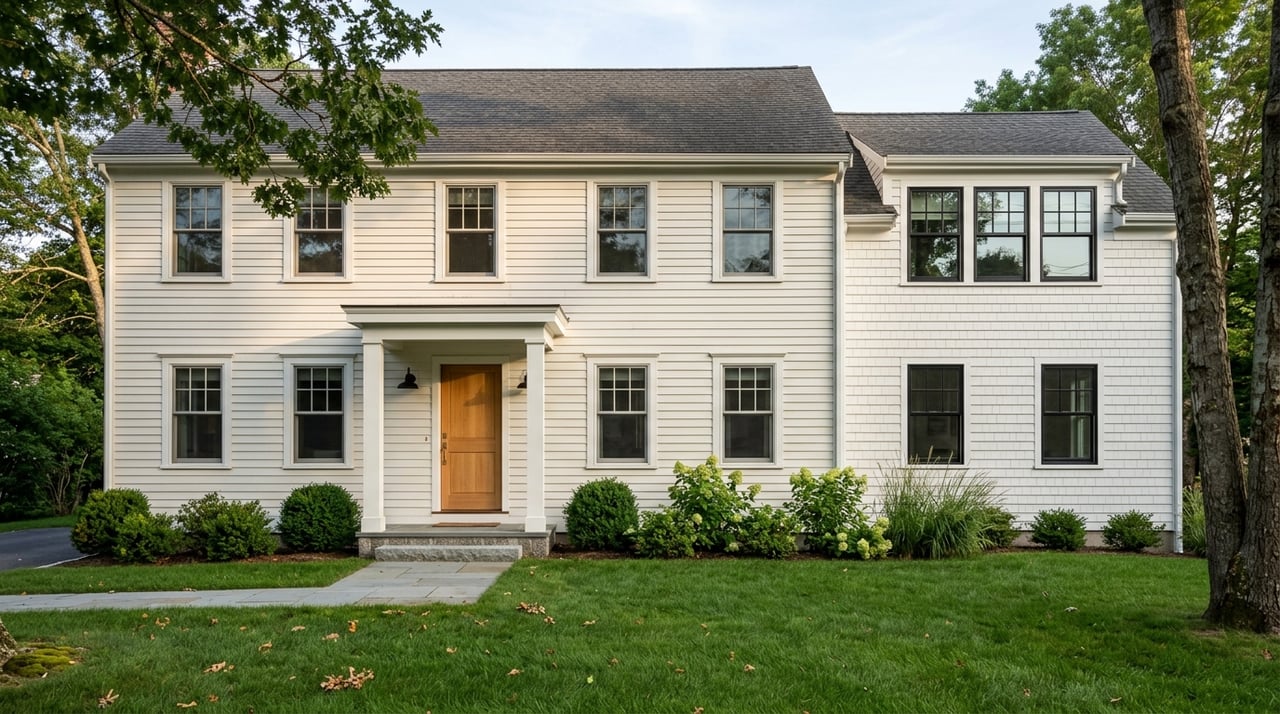
Colonials are two-story homes and can include traditional forms such as Garrison, Dutch Colonial, and Colonial Revival variations. In Lynnfield, they often appeal to buyers who want a more conventional floor plan and more flexibility for modern living.
Renovated colonials are often attractive because their larger footprint can support updated kitchens, primary suites, and expanded gathering space without changing the home’s overall street presence. For many buyers, that creates a strong balance between classic look and modern function.
The real question is not whether one category is always better. It is whether the home’s condition, layout, and updates match your budget and priorities.
A classic home may offer charm, a lower purchase price than a fully renovated alternative, and the chance to make changes over time. A renovated home may offer more immediate comfort, fewer near-term projects, and a floor plan that feels easier to live in from day one.
Here is a simple side-by-side view:
| Comparison Point | Classic Home | Renovated Home |
|---|---|---|
| Upfront appeal | Original features and older layout | Updated finishes and more turnkey feel |
| Purchase approach | May offer a lower entry point | Often commands a higher price |
| Near-term costs | May need repairs or upgrades sooner | May reduce immediate project needs |
| Layout | Can reflect older room patterns | May better fit current living preferences |
| Risk factor | More unknowns behind walls or systems | Depends on how thorough the renovation was |
In Lynnfield, this comparison matters even more because older homes make up such a large share of the market. A lower price on an original home can look attractive at first, but older homes can also come with higher heating and maintenance costs.
Not all renovations are equal. Two listings may both say “updated,” but the actual scope of work can be very different.
Massachusetts guidance notes that remodeling cost and timing depend on the age of the house, existing conditions, building technologies, maintenance history, and even the competence of the original builder. The same guidance also notes there is no fail-safe way to know what is behind walls without opening them up or having accurate plans.
That is why buyers should look beyond cosmetic finishes. Fresh paint, new counters, and modern lighting can make a strong first impression, but the bigger questions often involve systems, layout decisions, and how well the work was documented.
When you tour a renovated home in Lynnfield, it helps to ask practical questions that go deeper than appearance.
Consider asking:
These questions line up with local and state guidance. Lynnfield’s assessor information emphasizes that comparable homes should be compared to similar homes, such as Cape to Cape rather than Cape to ranch, and notes that missing additions or data errors can affect valuation.
One of the most helpful local reminders for buyers is that style matters. Lynnfield’s assessor guidance specifically says a Cape should be compared with other Capes rather than with ranches.
That may sound simple, but it is a big deal when you are trying to decide whether a home feels overpriced or fairly positioned. A renovated ranch and a renovated colonial may share a list price range, but they offer very different layouts, living patterns, and buyer pools.
In other words, price per square foot alone rarely tells the full story in Lynnfield. Style, condition, and renovation quality often matter just as much as size.
The best choice often depends on how you want to live, not just what looks best online.
If you are comfortable taking on projects over time, a classic Cape or ranch may give you a chance to buy into Lynnfield and personalize the home gradually. If you want separation between living areas, a split-level may fit well. If you want a more turnkey layout with room to spread out, a renovated colonial may check more boxes right away.
Buyers planning for long-term ease may also pay close attention to stairs and circulation. A ranch may feel simpler for daily living, while split-levels and colonials can offer more separation but less convenience if mobility becomes a bigger priority later.
In a fast market, it can be tempting to focus only on getting your offer accepted. But condition still matters.
Massachusetts homebuyer guidance says inspections are generally recommended, even though they do not guarantee against future issues. That is especially important in a town where much of the housing stock predates modern construction standards and where renovations can vary widely in depth and quality.
For pre-1978 homes, there is another important layer. Massachusetts says renovation work that disturbs painted surfaces in pre-1978 housing is covered by lead-safe renovation rules, and the state Lead Law requires lead-risk notification when those homes are sold or rented.
In Lynnfield, comparing classic and renovated homes is really about understanding style, condition, and future cost together. Because the town has a large older single-family housing stock and relatively little new construction, buyers who know how to compare homes within the same style and ask the right renovation questions are in a stronger position.
A classic home may offer character and opportunity. A renovated home may offer speed, comfort, and fewer immediate projects. The right answer depends on your budget, your timeline, and how much work you want to take on after closing.
If you want help comparing Lynnfield homes with a more local lens, the Marjorie Youngren Team can help you evaluate style, condition, and value with clear, practical guidance.
Buyers and sellers can expect expert real estate advice from start to finish and after. Contact us to find out how we can be of assistance to you!
