Why a Middleton Home's Bedroom Count Has Nothing to Do With Its Square Footage
August 20, 2026
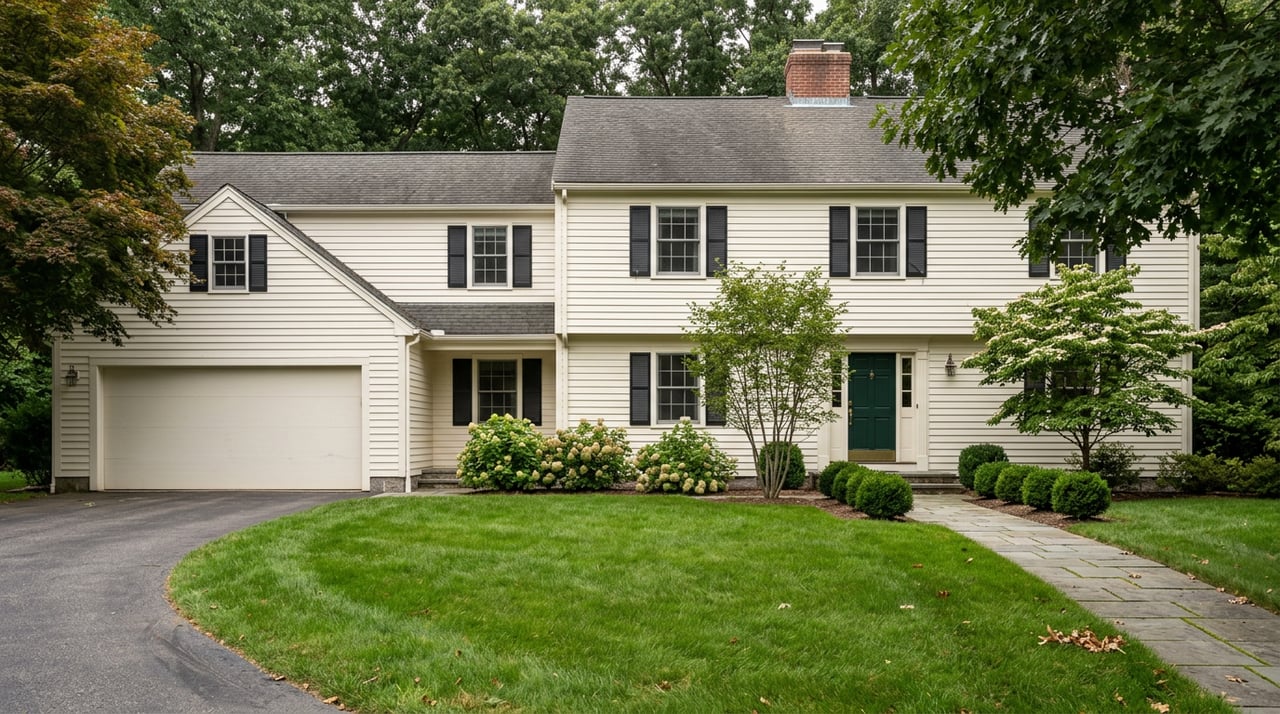
August 20, 2026
A listing that came across the Middleton market this year told a story most buyers scroll straight past. The house itself was modest: two bedrooms, one bath, sitting on 1.5 gently sloping acres abutting conservation land near Emerson Brook Reservoir. The real selling point wasn't the house at all. It was a single line buried in the property details: the seller had already secured town approval for a six-bedroom septic system.
That line is worth more than most buyers realize. It means someone had already done the slow, expensive work of proving the soil on that lot could support a much larger home, and had gotten it signed off by Middleton's Board of Health. Whoever buys that property isn't just buying land and an existing house. They're buying permission for what comes next, already paid for.
Middleton has no municipal wastewater system. None. The town's own new resident guide states plainly that there is no municipal wastewater collection or treatment system anywhere in Middleton, and that every property handles its own waste through a private septic system. That single fact changes how new construction and additions work here in a way that never shows up on a listing sheet.
In towns with public sewer, the number of bedrooms a builder puts in a house is largely a design decision, shaped by zoning and lot coverage. In Middleton, it's an engineering decision made months before ground gets broken, and it's tied by law to the septic system's design flow. The town requires a specific deed restriction depending on how many bedrooms the septic system was built to serve, with separate forms filed for two, three, four, and five-bedroom systems. Build a five-bedroom house and the deed carries the record of a five-bedroom septic approval. Try to add a bedroom later without upgrading the system, and the extra room is out of compliance before the paint dries.
| Bedrooms | What Middleton requires |
|---|---|
| 2 | Filed 2-bedroom septic deed restriction |
| 3 | Filed 3-bedroom approval, typical of older capes and colonials |
| 4 | Filed 4-bedroom approval, common across newer subdivisions |
| 5+ | Filed 5-bedroom approval, usually paired with a larger engineered leach field and a lot sized to hold it |
Middleton's zoning conversation about half-acre lots misses the more interesting number. The town's water supply code requires any well to sit at least 100 feet from a leaching field and soil absorption system, and at least 50 feet from a septic tank. Push those two requirements against each other on a residential lot and it becomes clear why homes in Sugar Hill Estates sit on 1.16 acres, or why a custom colonial elsewhere in town needed 1.38 acres to fit a home office, a family room, and the wastewater system underneath the lawn. The acreage isn't a luxury feature. It's the space the leach field and the well both need to keep their legal distance from each other.
Getting to that six-bedroom approval near Emerson Brook Reservoir wasn't quick. Before any new septic system gets designed in Massachusetts, the soil has to pass a percolation test. A licensed evaluator digs test holes in the proposed leach field, presoaks them, then times how fast the water drains to determine what the soil can support. Only after that test, an engineered design, and sign-off from the local Board of Health does a lot earn the right to a specific bedroom count.
For a buyer planning new construction or a significant addition, that process is not a footnote. It's weeks, sometimes longer, before a foundation gets poured, layered on top of the routine costs every septic owner already carries. A tank pumping typically runs $150 to $250 according to a Massachusetts Title 5 FAQ, on top of the inspections required before a system can be legally sold or expanded.
Walk the subdivisions built over the last decade and the septic-driven math is visible in the acreage on nearly every listing sheet:
None of these communities market septic capacity as an amenity. They sell houses. But the acreage attached to each one is doing quiet, necessary work that a buyer comparing Middleton to a sewered neighborhood might not think to ask about.
Middleton's overall figures this year read as a town in demand. As of June 2026, the median list price across Middleton stood at roughly $1.1 million, working out to about $468 per square foot, with homes spending a median of 31 days on the market, unchanged from the same month a year earlier.
Narrow that view to listings tagged new construction, though, and a mid-August 2026 snapshot shows the median dropping to roughly $860,000, with those homes moving even faster, a median of 20 days on the market. That gap isn't only about smaller floor plans. Some of it reflects land that already has its septic engineering finished: a subdivision lot with an approved design flow and a completed perc test carries less hidden cost than raw acreage where a buyer still has to commission that work themselves. A mid-July 2026 snapshot of active listings put the average asking price closer to $834,000, a reminder that the market here moves in a fairly narrow band once finished subdivision lots are separated from harder-to-price raw land.
Does any part of Middleton have public sewer? No. The town's own new resident information confirms there is no municipal wastewater collection or treatment system anywhere in Middleton. Every property relies on a private septic system regulated by the town's Board of Health.
Can I add a bedroom to a Middleton home without touching the septic system? Only if the existing system was already designed and deed-restricted for that bedroom count. Adding a bedroom beyond a system's approved design flow typically requires an upgrade, a new Board of Health sign-off, and updated deed paperwork before the space is legal to use.
What does a percolation test actually check? It measures how quickly water drains through the soil in a proposed leach field. A licensed evaluator digs test holes, presoaks them, then times the drainage rate. The result determines how large a leach field the lot needs and how many bedrooms the resulting system can support.
If you're comparing Middleton against Lynnfield, Reading, or Peabody and trying to make sense of why the math looks different, that's exactly the kind of conversation we have with buyers every week. We can walk a specific lot's septic history with you, help you read a Title 5 certificate before you write an offer, and connect you with the right local installers if a system needs updating. Reach out to the Marjorie Youngren Team when you're ready to look at what a Middleton lot is really telling you.
Buyers and sellers can expect expert real estate advice from start to finish and after. Contact us to find out how we can be of assistance to you!
